The West Coast — A Day of Rocks

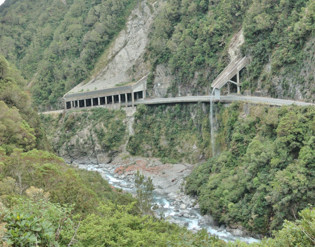
Crossing the continental divide at Arthur’s Pass we drove to Greymouth on the Tasman Sea (the suburb of the Pacific Ocean shared by New Zealand and Australia). The drive across the pass was on a dramatic alpine highway. You can see the one chute that channels a creek over the road and the larger avalanche cover for the road.

We have been blessed thus far with mostly sunny days, but today it became gray with drizzle in the afternoon. Nature also failed us in our first excursion of the day, which was to Punakaiki to see the Pancake Rocks about 60 km north of Greymouth.

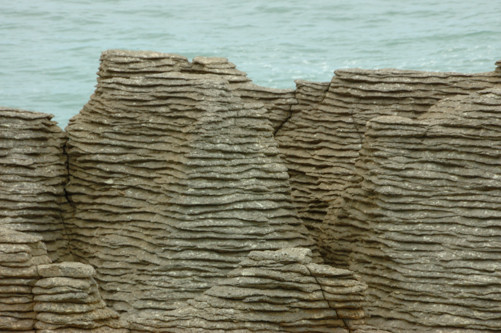
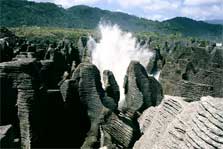
This rock formation and several other dramatic features on the coast north of Greymouth, is the result of a syncline, a fold in the earth’s crust that has pushed older limestone layers to the surface at the coast. For reasons that are apparently still not clear, near Punakaiki, this limestime has alternating layers that are more or less impervious to the acidic etching of the ground and seawater, causing the layered appearance of the rock in the photo below. Although this may look man-made, it is not.The other thing that draws big crowds to Punakaiki, is the blow holes there. These blow holes are created by a combination of groundwater cutting openings from above and the seawater undercutting the rock formations from below. When the tide is high and the surf is up, the waves hitting the base of these formations will shoot up and out of the blow holes (as in the photo to the left that  I found on the web) making a loud thumping sound. Unfortunately, although we could arrange to arrive at high tide, we were unable to will a strong swell and so, although we heard a few thumps, we never saw spray out of the top of any of the blow holes.The picture below shows the base of one of the blow holes, being hit by a rather too anemic wave.
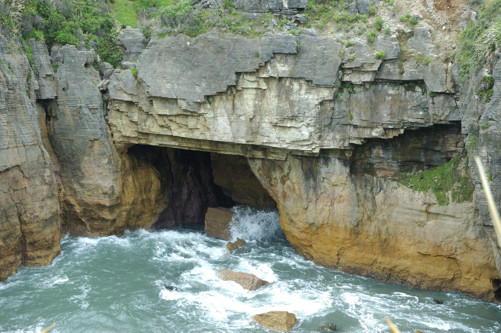
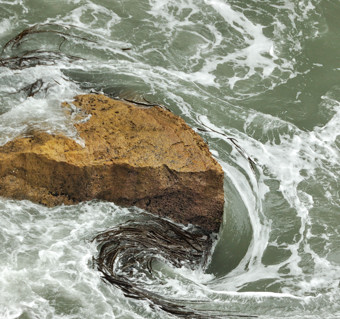
Although the waves were not strong enough to create visible spouts, their action within these rock formations was still impressive. Look at it whipping the kelp in whirlpools in the photo on the left.
Centuries of wave action have also created interesting rock shapes. I would have included one or more of these here, but the rock formations we saw later in the afternoon were so much more dramatic that I’ll show you those instead.
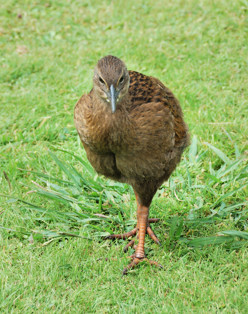
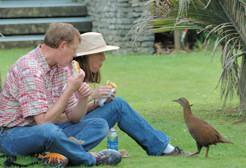
Later, while we were eating lunch, we were visited by a family of wekas. The weka is a flightless bird endemic to New Zealand. About the size of a small chicken they are quick on their feet, bold, inquisitive, and quite interested in everyone’s lunch!
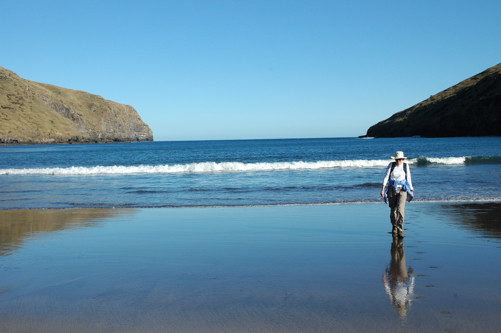
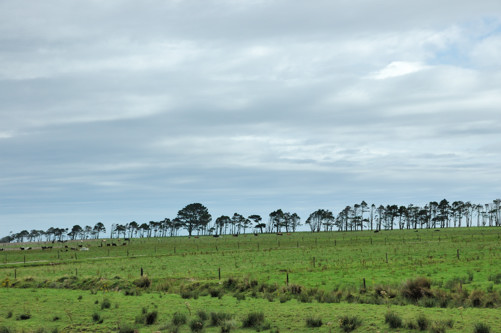
Leaving Punakaiki we drove back south. I found it interesting that in much of what we have seen of New Zealand, where there is reasonably level land along the beach (in many places, the coast is quite steep) it does not appear to be highly valued “beach front property” and often it is agricultural. The picture below, which I’ve included just because I really like it, is looking to the north across one of these fields out over the ocean. The trees are a windbreak; we saw many of these.
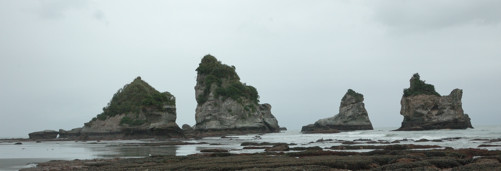
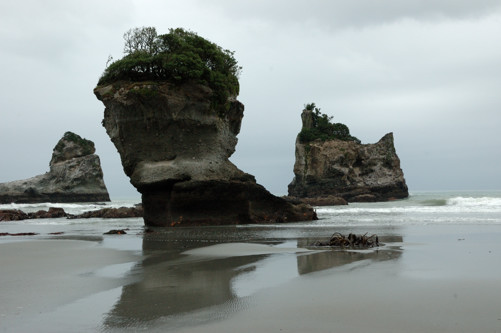
About 40 km south of Pancake Rocks we came to another manifestation of the same rock formation, the Motukiekie Rocks. Without the booming blow holes, this is not a tourist attraction like Pancake Rocks. In fact, although you can see these rocks from the highway, they are no signs to mark them. Fortunately, we had come across an unusual (non-corporate?) guide book, NZ Frenzy, that mentioned this as as a “must see”  place and describes how to get access to the beach. You have to look for the place to pull off the road 500 m south of crossing 13 Mile Creek. (Clearly New Zealand has not fully incorporated the metric system.) The photo below shows the main formation.
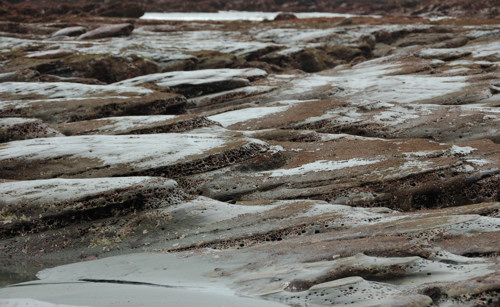
We timed our arrival here to be within two hours of low tide so that we could walk onto the beach. Although there is sand, much of the beach here looks like this.Being able to get up close really lets one better appreciate the majesty of these rocks and the power of the sea action that carved them out.
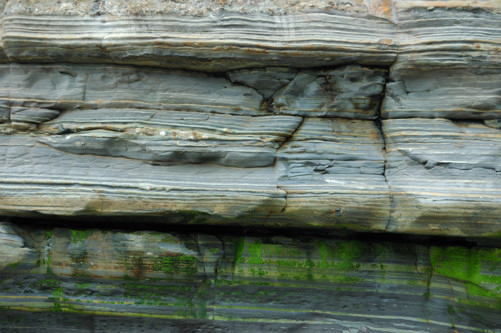
Getting down onto the beach also makes it possible to view the interesting tapestry on the cliffs.
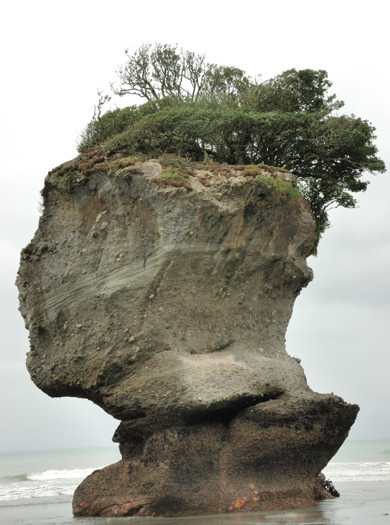
Here is my favorite image from this set — a natural bust.
From Motukiekie Beach,  we  finished a long day of driving by continuing south from Greymouth, in the rain, for about 80 km to a B&B near Hokitika. This is an area known for its jade. After dinner that night we went to see a glow worm grotto. Glow worms are the larval form of an insect that, like fireflies, can emit a soft iridescent light. Unlike fireflies, that use this light as a mating signal, glow worms, which cannot fly, use it to attract flying insects that they capture somehow for food. So being in a glow worm grotto is sort of like looking up to the stars.
Posted in New Zealand, Uncategorized | Leave a comment

Avalanche Peak

Another day of very few words — but this time many more pictures.

Why are there mountains? So that we can climb them of course. Today our objective was Avalanche Peak, which rises above Arthur’s Pass Village. I had been worried about this day, because I had read that, although the weather may be fine down in Christchurch on the Canterbury Plains, it can be ugly up at the summits of the Southern Alps. However, we were blessed with a warm sunny day with, unusually light winds at altitudes and so here we are setting out on this adventure.

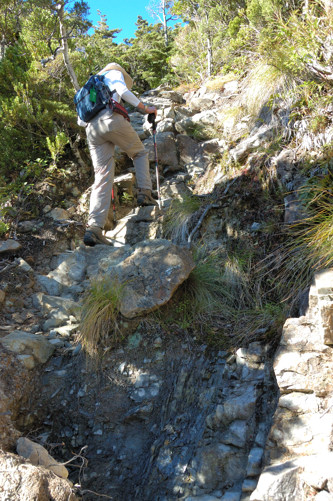
Although the distance we were hoping to do today was not overwhelming, the trail ascended 3300 feet (and then, of course, descended!), making this more of a climb than a hike. Probably for variety, the guidebooks suggest going up on the Avalanche Peak trail and then down on Scott’s trail, which is less steep. However, we decided to make our day easier by taking the easier Scott’s trail both ways. From what people told us who were coming down with us after going up Avalanche Peak trail, this was the right decision. Unfortunately, although Scott’s trail was less steep than the alternative and well maintained, much of it still struck us as quite steep and more difficult becuase it was so rocky. Nina asked me to take this photograph to illustrate how difficult this was; but, in fact, we encountered many sections that were worse than this — and it was all more difficult coming down.

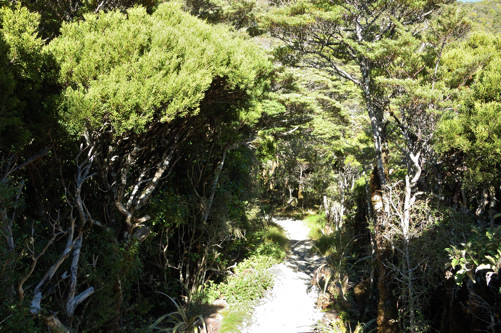
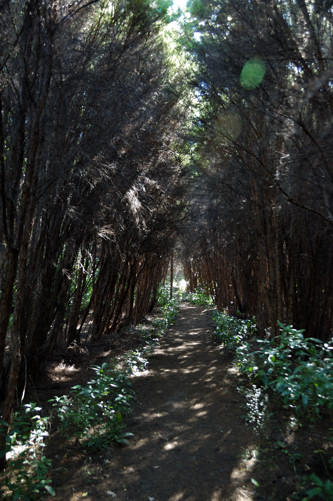
Lower on the mountain, we were mostly walking through hardwood forest.

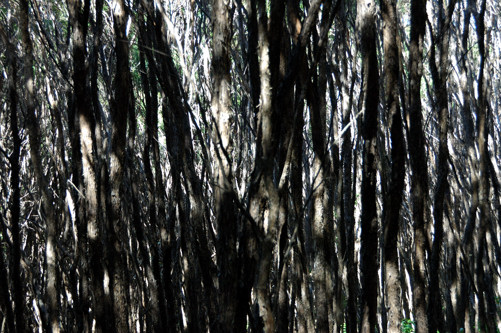
This reminded me of one of the photographs that I took in the Hinewai Reserve.

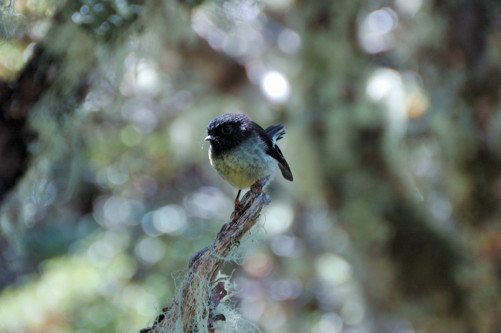
Below is one of the natives that kept us company along the wooded part of the hike.

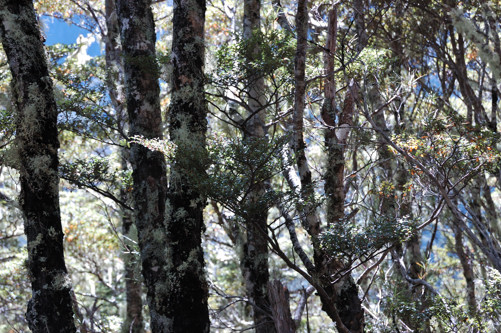
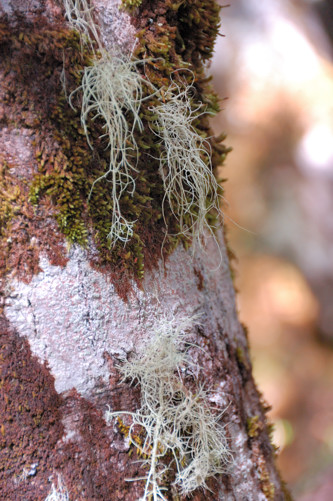
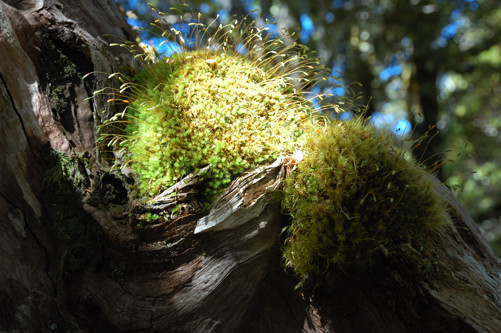
One element of alpine forests that I love is the variety of lichens and mosses.

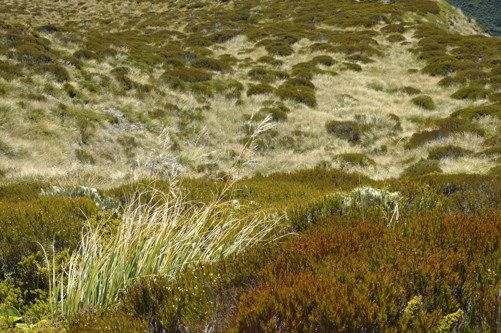
As we got higher, the trees disappeared, replaced by alpine meadow.

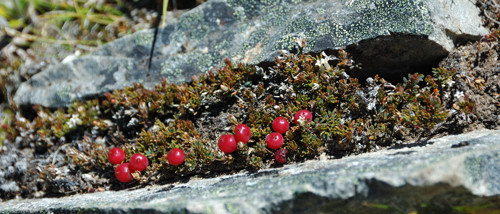
It is amazing how flowers at this altitude survive in any niche that they can find.

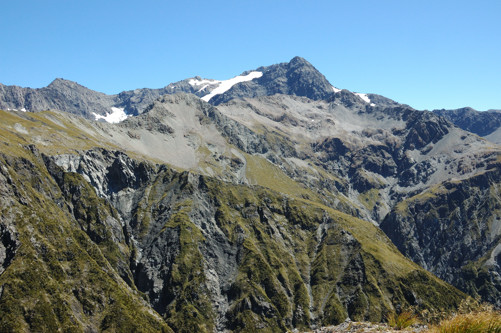
Up above the tree line we could see other, impressive, nearby peaks.

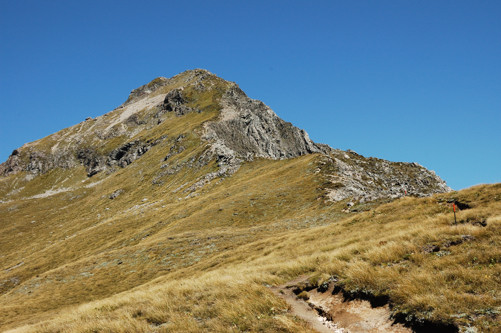
It was only after we had been above the tree line for an hour or so that we finally were able to see the approach to Avalanche Peak; it is along the ridge on the right side of the peak in this photo.

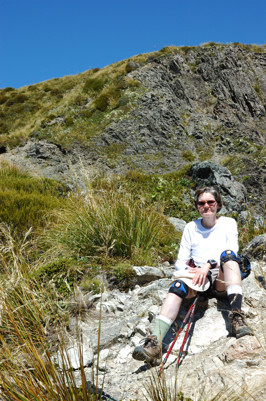
It was about here that Nina decided that she had had enough climbing for the day.

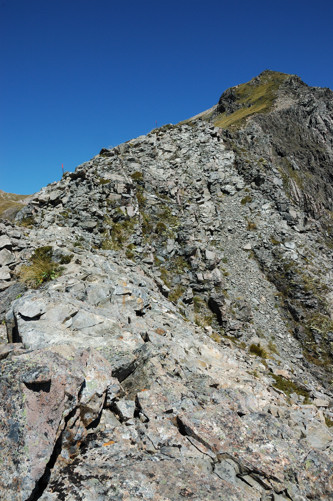
I went on about 15 minutes further, at which point I encountered this  section of trail — loose rock with a steep drop on either side — and decided to turn back. My family knows well that I do not like to be near (or have others near steep) drop offs.

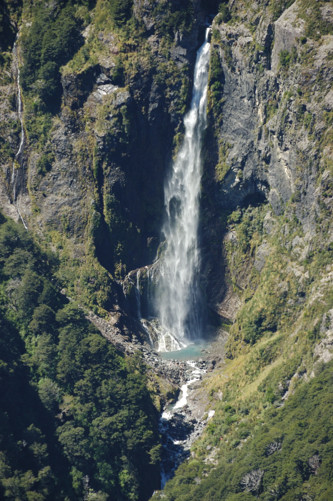
As we made our way down, we repeatedly got great views of this, Punchbowl Falls.

Posted in New Zealand, Uncategorized | Leave a comment

Driving to Arthur’s Pass — Castle Rock

No long essays today! We left the Banks Peninsula and drove to Arthur’s Pass Village.

There is a range of high mountains that form the spine running down the center of most of the South Island of New Zealand. That they are called the “Southern Alps” might give you the impression that there are few roads that run between the east and west coasts, and that is true. Arthur’s Pass is the name of the pass that makes one of these four routes possible, the national park the surrounds the pass, and this small town, just to the east side of the pass where we are staying. So, as I suggested we would be two days ago, we are now in the mountains.

Our drive here took longer than it might have because we had to stop in Christchurch to finish the process of setting up our finances for this visit. Driving on the left is becoming more comfortable and we made it in and out of town with no problems.

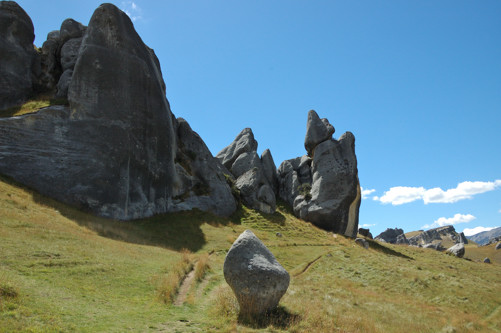
The one other stop that we made on the way was at Castle Rocks. This is an area entering the mountains where, for reasons that are not clear to us, large boulders of limestone are exposed. Rock climbers come here to practice their skills without ropes. It is also just an interesting place to walk around.

Tomorrow, we plan to climb one of the mountains above the village.

Posted in New Zealand, Uncategorized | Leave a comment

Hiking in the Hinewai Preserve

A millenium ago, when the Maori first arrived, the Banks Peninsula was heavily forested, mostly in red beech trees with evergreens (not the ones we know, but rather from the family Podocarpaceae that are mostly native to New Zealand). In 1838 Jean Langlois, the captain of a French whaling ship purchased from local Maori what he believed to be the entire peninsula for goods worth about 1000 francs. This deed became the starting point for a muddied but determined effort by the French to start a colony on the peninsula. Langlois sailed home to France to make arrangements and recruit settlers. However, while the hopeful French settlers were on their way, the English established sovereignty over the whole of the north and south islands with the treaty of Waitangi. On August 11th, 1840, six days before Captain Lavaud was to arrive with a group of Frech and German settlers, the British flag was raised in Akaroa. However, the settlers stayed, planted gardens that included fruit and nut trees along with those roses that survived their journey. In 1843, an agreement was reached under which the French relinguished all claim to jurisdiction of the settlement and were placed under British law. The first British arrived in 1850 and what is now the town of Akaroa was established with the French at the north end and the British at the south end.

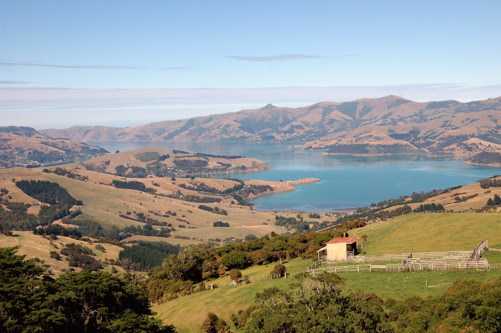
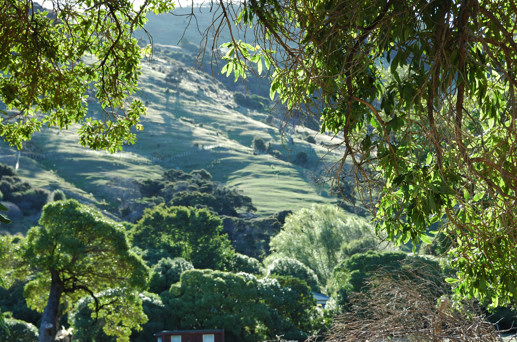
With the settlement of Akaroa, the forests on the peninsula was seen as a source of timber needed for the burgeoning city of Christchurch. By the end of the 1800s, less that 1% of the original forest remained. You can see the result in the photo below. There is a sheep pen in the foreground, set on hillsides used as pasture occasionally broken by stands of trees.


As the forests were cleared, the land was planted in a variety of grass that the English call cocksfoot. The resulting meadows were used both as a source of cocksfoot seed and as pasture for cattle. With the cattle came many dairies. Today most of the cattle are gone, replaced by sheep.

This is a lot of background to explain why we spent the day hiking through the Hinewai Reserve. This nature reserve is an effort, covering over 3000 acres, to protect and restore native vegetation and wildlife in this section on the southeast part of the peninsula.of very small part of the reserve consists of old growth forest, the rest of moving in the direction and should achieve that state in several hundred years.

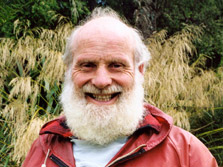
Much of the energy behind this effort is that of a botanist, Hugh Wilson, who has been working on it since its inception in 1987, and who we met cutting grass to make passable one of the trails on which we were hiking. He is an incredibly interesting and obviously quite energetic gentleman.

Because hiking through the reserve had been recommended by several sources, and becuase this history made the effort that the reserve embodies seem interesting we decided to spend the day hiking the reserve. Although one of the shorter options might have been preferable, we opted for the trails that loops around one of the two major catchments that make up the reserve — the second catchment  has no trails in it. This loop trail turns out to be about 10 miles long with about 1600 feet of altitude loss/gain, much of it quite steep. It is true that we need to build up our strength for the Milburn track, next week, but this hike was hard on both of us.

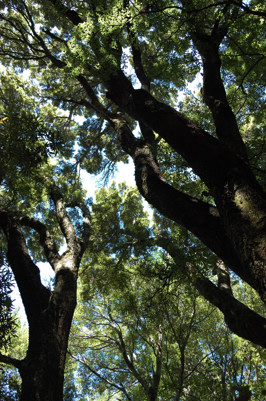
Taking this trail did give us the opportunity to be in the largest, but still small, section of old growth forest in the reserve. (The photo on the left below.) We also made it out onto the beautiful beech (shown in the photo directly below the two that follow this paragraph) that is  at the bottom of the catchment. And, of course, we walked through a variety of vegetation in various stages of progression from the gorse that took over the pastures once the grazing on them stopped (and which, interestingly, provides an excellent protective environment for the young, native trees that they are planting) to juvenile hardwood forest (the photo on the right below).

However, we began late and  the hiking took about 6 hours, so we did not leave the reserve until after 7 — a very long day. Fortunately, the days are long here and the sun doesn’t set until after 8 PM.

Finally, just because I like them, I’ve attached two more photos. The one just below is another looking through a stand of juvenile trees. The second is of the Parakakariki headland above Otanerito Bay.

Posted in New Zealand, Uncategorized | Leave a comment

Days 2 — Driving on the Left to the Banks Peninsula

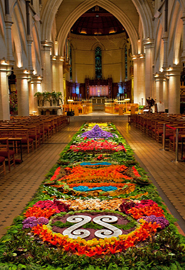
Floral carpet in the Christchurch CathedralWe finished our day in Christchurch by attending a choral evensong at the Anglican cathedral in Christchurch. The singing, done by the men and boys of the cathedral choir was lovely.  As part of an annual event called the Festival of Flowers, the central aisle of the nave was decorated by a living floral carpet. This was a flower arrangement on the floor that was about 100 feet long, 4 feet wide, and, except for some highlights, only several inches high — an elaborate tapestry woven from an incredible variety of living flowers, leaves, and branches. We finished a great first day with a meal at Nobanno, which bills itself as the only Bangladeshi restaurant in New Zealand. We enjoyed their food — which was similar to Indian food we have had, very spicy and fragrant, but without the peppery heat of much Indian food.

Monday morning we picked up a rental car. We had found an excellent rate by agreeing to have an older car (over 100,000 miles). Of course, we knew that driving in New Zealand would require driving on the left, which had us somewhat nervous. What we had not counted on was that the older car we were renting might have a stick shift. We have both driven stick shifts in the past — but probably not for 20 years. In addition, because the driver sits on the right, in this car you shift with your left, not your right hand. I am happy to report that we made it safely through our first day. It was a day with several driving challenges because, now that we had a car and could easily move around Christchurch, we wanted to open a bank account, get a SIM card for the cell phone, and pick up some provisions. Although we found places where we could take care of these chores outside of the central city, with its confusing traffic patterns and dense traffic, this still involved city driving. Once we left the city, the driving was considerably less stressful. Fortunately, the gears (except for the always peripatetic reverse) are still in what seems to us to be the “normal” positions. It turned out that what seemed to cause the greatest problem was that the turn signal was on the right side of the steering wheel — many too many times the signal that cars behind us received of an intended turn or lane change was the actuation of our windshield wipers!

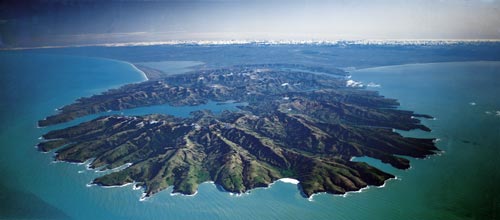
From Christchurch we drove south and east about 100 km (you’ll just have to convert yourself, we’ve gone metric) onto the Banks Peninsula. The photo below is an aerial view that I found on a NZ government website.Volcanic activity between 6 and 11 million years ago led to the formation of two overlapping volcanic cones. After this activity stopped, the cones were gradually eroded to about half their original height and deep valleys have formed. We are staying at Halfmoon Cottage, a “backpackers” on Barry’s Bay, which is part of Akaroa Harbor the deep harbor at center left. This was formed about 7,000 years ago when the sea rose to its present height and flooded the valleys. Notice also the snow-covered Southern Alps are in the background of this photo; we drive there on Wednesday.

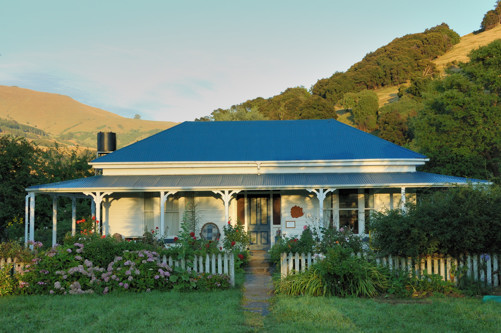
Backpackers are budget hostels. At least in New Zealand, they typically offer accommodation in both traditional, “single” and “double” rooms as well as in “dorm” style rooms with 4 or more bunks shared by people who may be unrelated. They also typically make kitchen facilities available. Halfmoon Cottage, which you can see on the left,  appears to be  unusually elegant, and our double room is spacious and comfortable.

The destination on the Banks Peninsula is the town of Akaroa, which is across the harbor from us. It is a quaint, touristy village, that plays up its French roots. We enjoyed dinner there last night and have had a great time driving the country roads through the spectacular scenery here.

Posted in New Zealand, Uncategorized | Leave a comment

We’re in New Zealand — Or is this New Jersey with an accent?

Hi –

We’re finally made it to our hotel about 1:30 AM Christchurch time last night — almost exactly 24 hours after we got up to leave for the airport. After a good night’s sleep we are spending the day walking in town.

Our motel is about 8 km from the center of the  city towards the airport, in a quiet area that seems full of parks. We took a bus towards the center of the city, getting off at Mona Vale, a large Victorian house, which has been turned into a cafe and banquet facility, set on gorgeous grounds with the Avon River running through. Because we had gotten up late, we had an early lunch at the cafe.

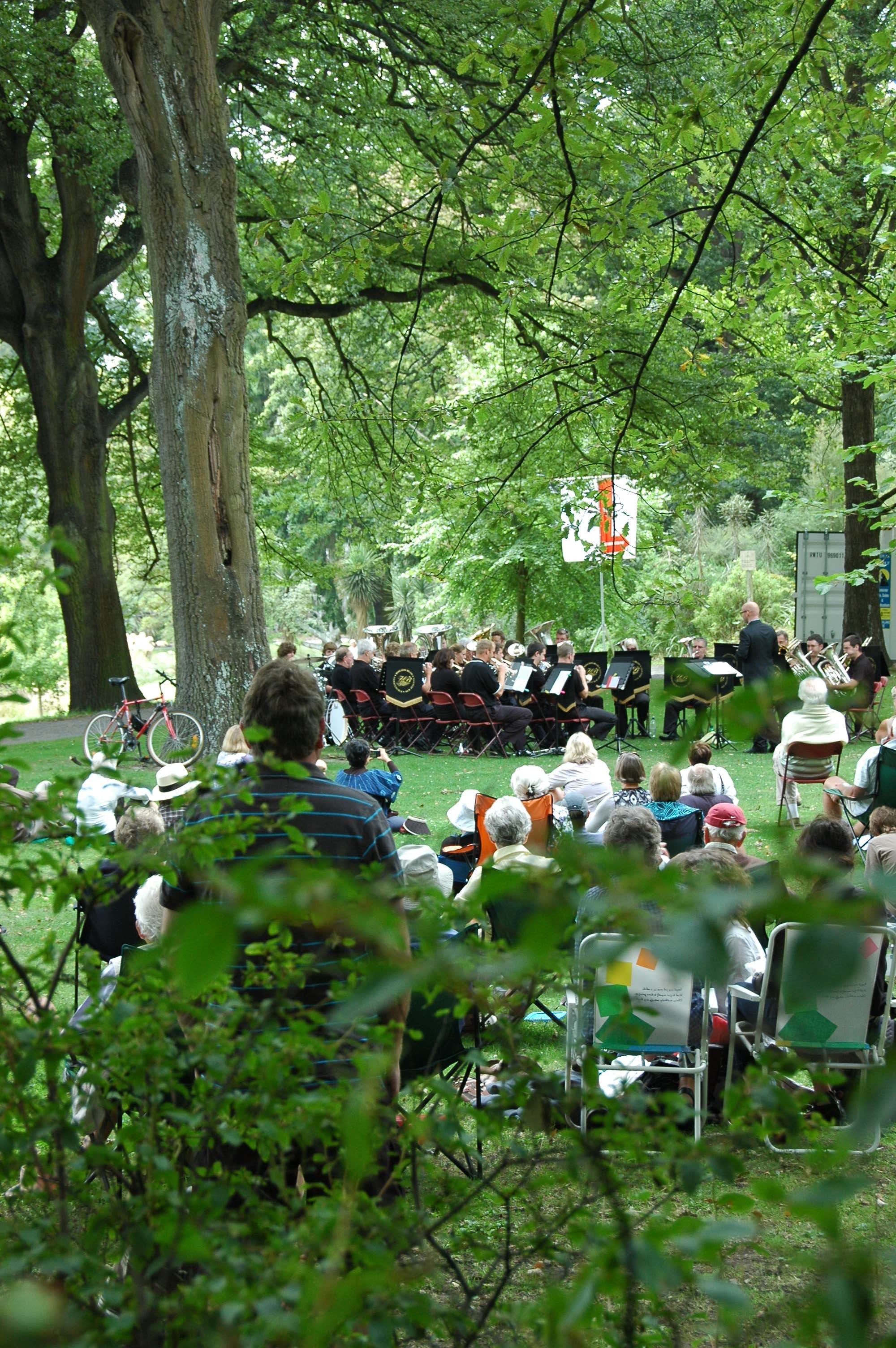
From Mona Vale we walked through yet another large park on the western edge of the central city.  As we walked, we were serenaded by a concert in the park.

The Christchurch area of New Zealand appears to be lush and green, very much as we remember New Jersey. Not surprisingly then, we recognized many of the plants that we used to grow in New Jersey — rhododendrons, hostas, astilbes, Canna lillies.  In addition, however, there were plants such as eucalyptus trees that we know from California.

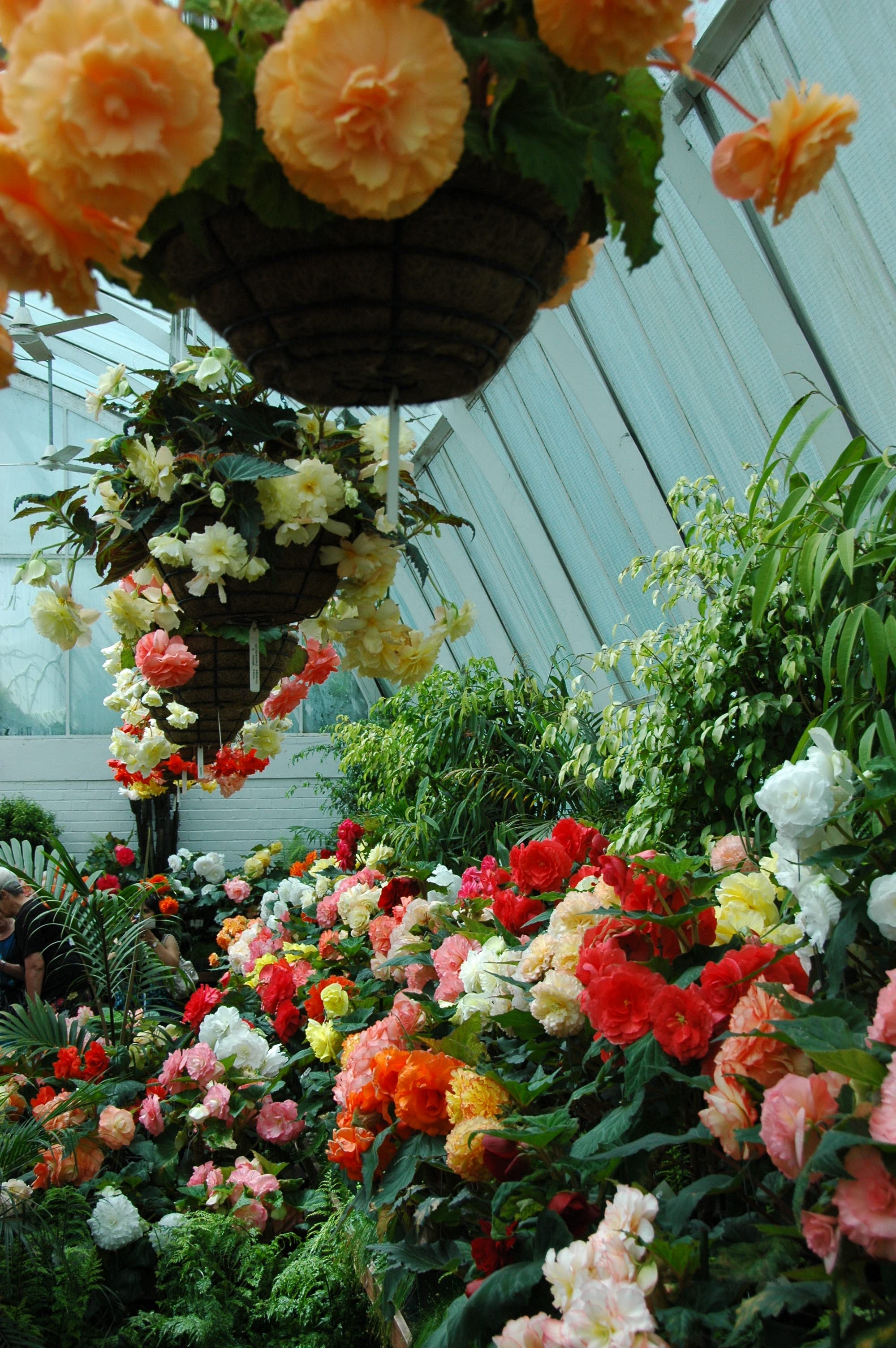
On the city side of the park is a large, wonderfully arranged botanic garden, that we enjoyed walking through. Of particular interest were a section dedicated to New Zealand natives and a wonderful conservatory. The begonias pictured here are from it.

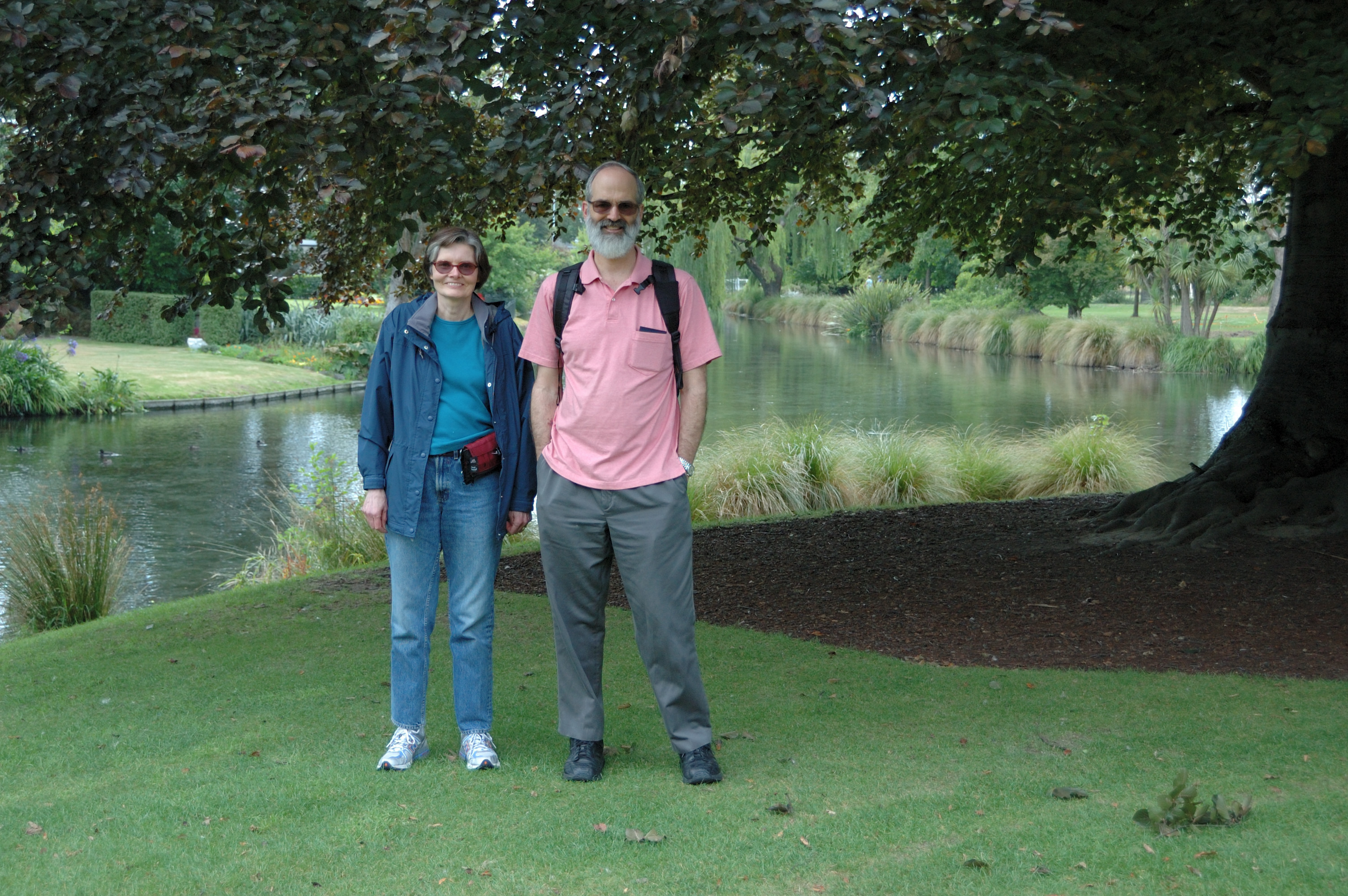
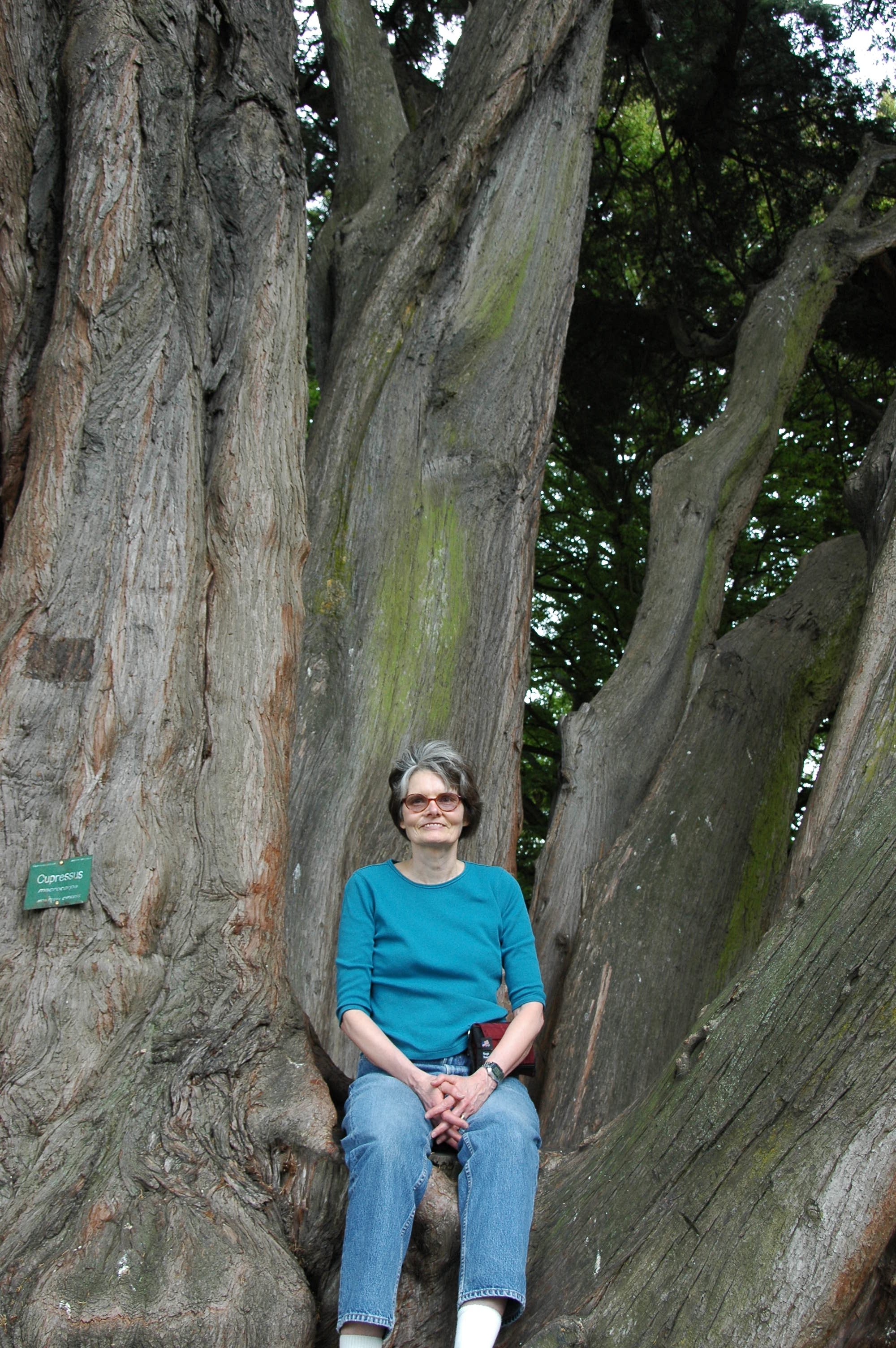
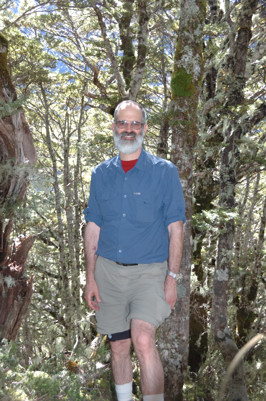
Another wonderful element of the botanic garden were the many impressive specimen trees. Here is Nina in one of them.

As we write this, it is mid-afternoon and we are in an Internet cafe in the center of the city — a large, bustling metropolitan area.

Posted in New Zealand, Uncategorized | 1 Comment

A Big Step Closer, But Not There Yet

Our flight did start boarding this morning before 7. We learned from the Captain that the delay had been caused because there had been a fuel leak on the plane when it had been crossing to Los Angeles. However, because the leak was small, it had been necessary to bring specialists from Boeing in Seattle down to open up the panels of the plane, locate, fix the plane. Apparently that all took longer than expected.

Some now, 14 hours later, we are in the airport in Sydney waiting for the flight to Christchurch on which we were originally scheduled. It is almost 6PM here, 8PM in Christchurch, and 11 PM in California. It is raining here, occasionally quite hard, so perhaps we did not lose too much having missed our day in Sydney.

After a final 3.5 hour flight we should be Christchurch at midnight local time. With luck the customs formalities will be quick, our bags will be there, and we make our way quickly to the nearby hotel where we are booked and get to sleep.

Posted in New Zealand, Uncategorized | Leave a comment

Flight interrupted

When we arrived at LAX at 4:15 for our 8:10 flight (we were worried about rush hour traffic but there really was not any), we were informed that our flight was delayed two hours. Then at 6:30, while we were waiting at the gate, V Australia announced that, because of mechanical problems, our flight would not leave until 7 AM tomorrow morning. We were given hotel and meal vouchers. Unfortunately, however, we have no luggage. Normally we would carry on a bag with at least some clothes; however, when we were checking in we learned that V Australia limits carry ons to 15 pounds and, since our bag weighed more, we had to check it.

As you can see from our itinerary, we were scheduled to spend the day in Sydney, arriving at 6 AM and leaving from Christchurch at 6PM. With this delay it is possible, but not clear whether we will be able to make that connection. It will be disappointing not to see Sydney as we had planned. It is also annoying that we had to pay $90 for visas that will now probably be of little use to us. So now we are focused on getting to New Zealand!

Posted in New Zealand, Uncategorized | Leave a comment

New Zealand trip itinerary

This is where we will be adding pictures and descriptions of our 2 months in New Zealand. Here is our  itinerary .

Posted in New Zealand, Uncategorized | Leave a comment